
Home/Councils & communities/Approached from overseas?
Due diligence and troubleshooting
Had an approach from overseas?
Here’s how to check it, and when to call us.
A letter, an investor, an invitation. Most are genuine. A few aren’t what they seem, and the cost of getting it wrong falls on the council. Start with our free checklist. If anything doesn’t add up, talk to us in confidence.
Free, confidential first chat. We won’t contact the other party unless you ask us to.
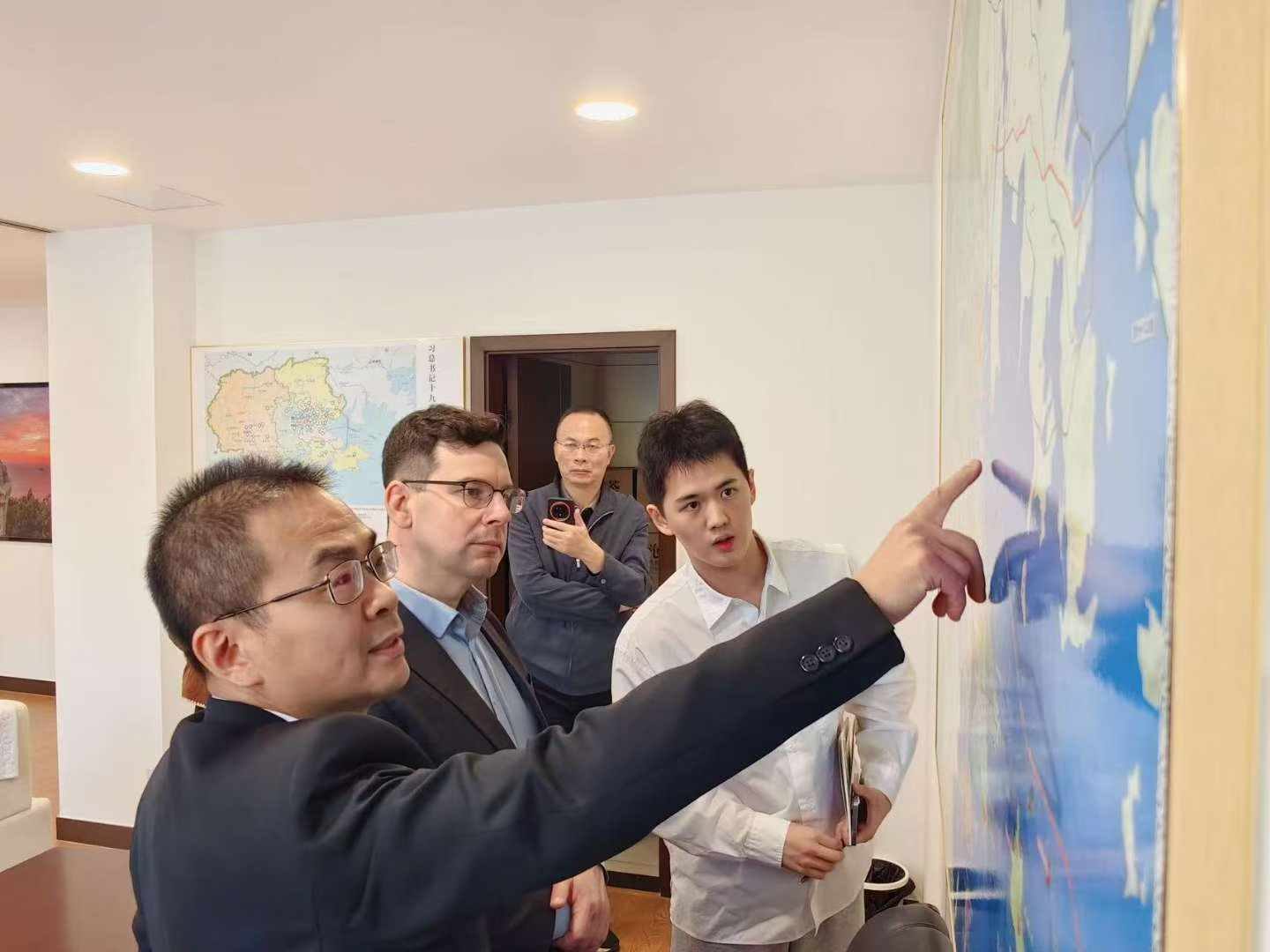
Step 1 · check it yourself
Five quick questions
- Can you find them in official records, like a company register or a government website?
- Do their names, titles and details stay the same everywhere?
- Is it clear exactly what they want, in writing?
- Are they offering gifts, paid travel or hospitality?
- Would you be comfortable reading about it in the local paper tomorrow?
The full checklist goes further: who is really behind an approach, what they are asking for, gifts and hospitality, and a traffic-light guide for deciding what to do next.
Step 2
When to call us
- You can’t confirm who they are
- They’re asking for access to elected members, data, land or infrastructure
- There’s an MOU, a signing or a visit on the table
- There’s a deadline, or gifts or paid travel are involved
- Something just doesn’t feel right
The worries we hear most
“Could this embarrass us?”
We check before anyone replies, so nothing ends up in the local paper that you can’t explain.
“Is this foreign interference?”
We know the warning signs and the official NZSIS guidance, and we’ll tell you plainly if something needs a closer look.
“Are they who they say they are?”
We check official records in New Zealand and overseas, including sources in the other party’s own language.
“What are we signing up to?”
Protocol, MOUs and return visits explained in plain English, in both languages, before you commit.
“Is it worth the ratepayers’ money?”
Clear deliverables, a short monthly summary for council, and a review every year.
“What if our officer leaves?”
We keep the records, contacts and history, so the relationship doesn’t leave with them.
What happens when you call
What’s free, what’s paid, and what you get.
01 · Free
A confidential first chat
30 minutes on the phone or Zoom. Tell us what’s happened. Nothing goes further unless you want it to.
02 · Fixed quote
We check
Research in New Zealand and overseas, in English and the other party’s language. You agree the price before we start.
03 · Included
Written advice
A short briefing you can take to your chief executive or a councillor workshop, and a call to talk it through.
04 · If you want it
Ongoing support
Replies, MOUs, protocol and visits. Quoted per job, or a monthly fee from $500 + GST.
What we check
- Who they are: registration, ownership and history
- Who they represent: which level of government or body, and whether they’re the right counterpart
- Track record: other relationships, in New Zealand and elsewhere
- What they’re asking: the real request behind the letter
- What it commits you to: costs, hospitality, exclusivity, information and reputation
Your written advice
- Who they are and who they represent
- What they’re asking for, and why
- Red flags found, and what we couldn’t confirm
- Compliance points to consider
- Your options and our recommended next step
- A suggested reply, translated for the other party if needed
Usually two to four pages. Ready for a chief executive or councillor workshop.
How we’re paid, plainly
Councils pay us directly. A fixed quote for a check, or a monthly fee for ongoing support. Your first conversation is free.
No payment from the other side. We don’t take money from an overseas party we’re checking for you. If any partner pays us a fee, we tell you in writing first.
Beijing New Bridge. Our sister company in Beijing handles contracting in China. It’s a separate company, and we’ll always tell you when it’s involved.
Foreign interference and the official guidance
Councils are expected to manage international relationships openly and carefully. We help you ask the right questions early, and point you to:
- NZSIS guidance on foreign interference
- The Protective Security Requirements (PSR)
- Your council’s gifts, hospitality and conflicts of interest policies
- Procurement rules, where money or contracts are involved
We’re not lawyers or security advisers. If you need one, we’ll say so.
Who’ll be helping you
Simon Appleton (方志杰)
Lead consultant
- 18 years’ experience working with local governments in New Zealand, China, South Korea, Japan, Vietnam, Cambodia and Thailand
- Economic Development Manager, Toi Economic Development Agency and Ōpōtiki District Council, 2011–2014
- Executive Director, Korea New Zealand Business Council, 2018–2024
- Honorary Consul for the Republic of Korea in Hawke’s Bay since 2022
- Master of Law in International Relations, Renmin University of China, and professional working Chinese
- Speaks English, Chinese and Korean
36
New Zealand councils supported with their international relationships
Eastern Bridge provided valuable due diligence and international engagement training for our staff and elected members. Understanding the risks and opportunities of international partnerships is essential for councils, and Simon helped ensure we approached these relationships in a well-informed way.
John Tregidga
Former Mayor — Hauraki District Council
Simon’s work through Eastern Bridge helped bring several New Zealand councils together to collaborate in the international relations space. Rather than working in isolation, councils were able to share knowledge and opportunities that benefited multiple communities.
John Forbes
Former Mayor — Ōpōtiki District Council
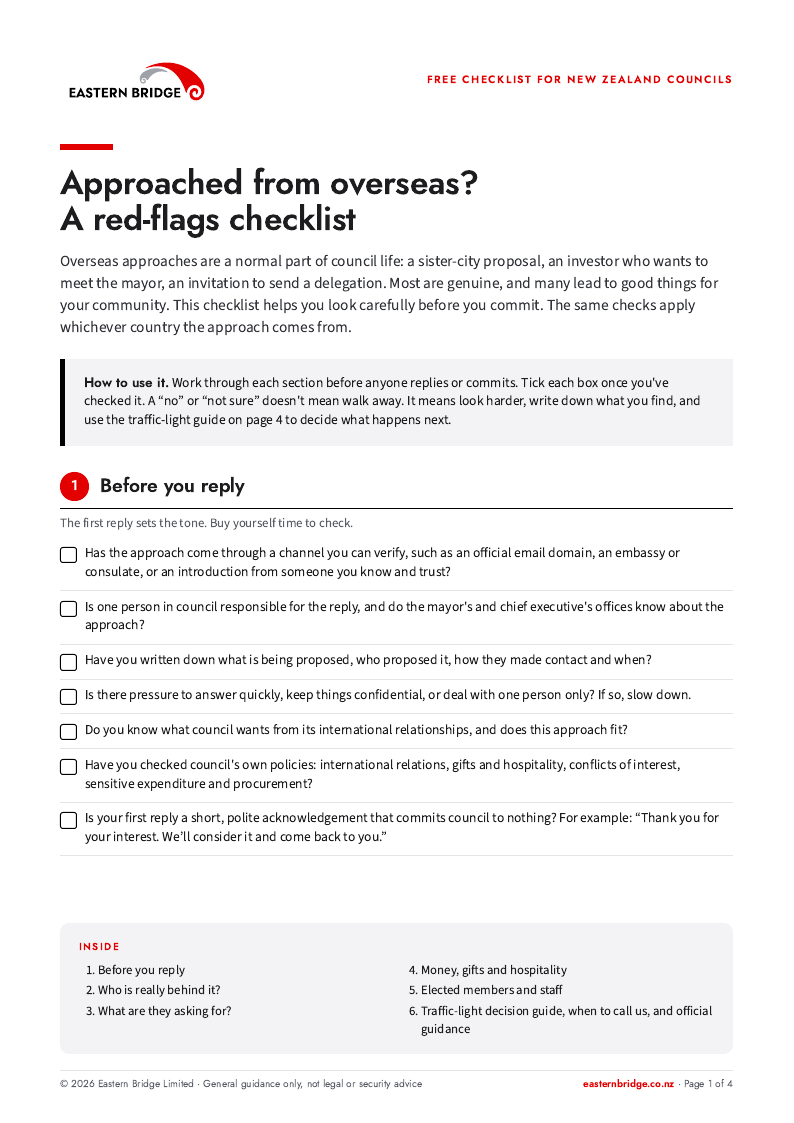
Free download · 4-page PDF
The red-flags checklist for councils
A practical checklist to work through before anyone replies to an overseas approach, with a traffic-light guide for deciding what to do next. Print it, share it with your team, keep it by the phone.
No email address needed.
Got an approach?
Talk to us. Forward it to simon@easternbridge.co.nz, or book a free 30-minute call.